Automotive
Shift into gear in the automotive industry
At City of Portsmouth College, automotive students take their skills to the fast lane – working with pro drift teams through exclusive links with the British Motor Show and Drift Limits Motorsport Academy.
From prepping live-performance vehicles to working trackside at the UK’s top automotive event, learners gain hands-on motorsport experience and industry access like no other.
AUTOMOTIVE
Subject overview
What's on offer
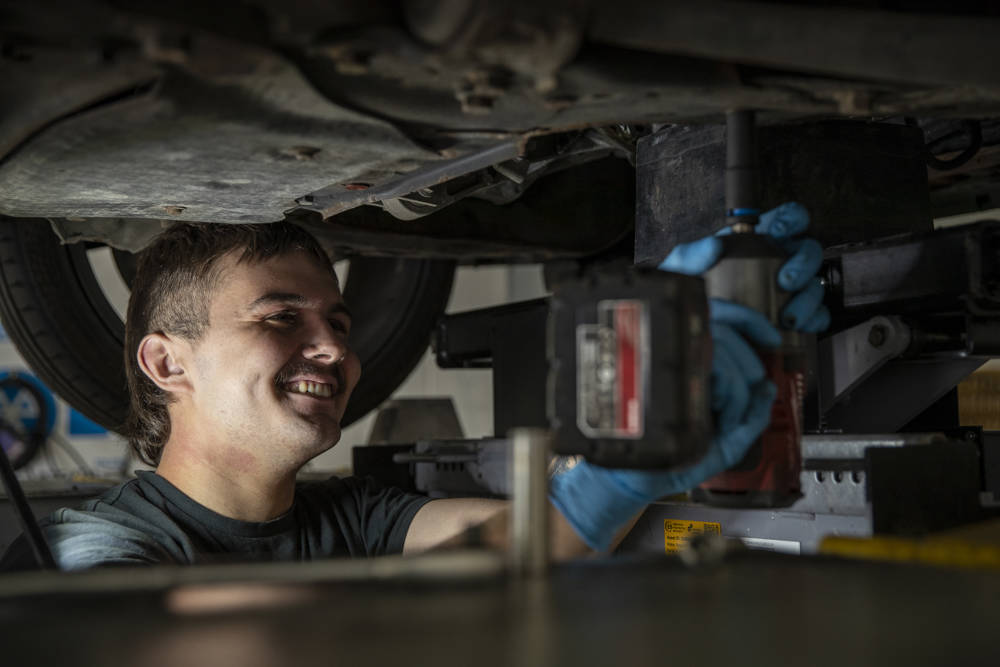
From Formula 1 pit crew and experts in restoring vintage vehicles, to family-run garages with a strong community customer base, car mechanics are vital to keeping engines of all shapes and sizes running.
At City of Portsmouth College, we’ll provide you with the nuts, the bolts and everything in between to get you into gear and on the right track with your automotive career. With Diplomas across three levels of study, you’ll get the fundamentals together with the specialist skills to meet the modern car market – including electric and hybrid systems.
And you’ll be taught be a team of tutors who have years of experience between them and who are ready to pass on their knowledge to you. Are you ready to get the keys to success?
Subject highlights
- develop model knowledge using software like LJ Create simulator and Vehicle Visuals animator
- meet employers and showcase your skills as you complete live assessments
- explore a wide range of car brands and models in our modern workshops, including a fully equipped MOT bay
- learn what matters in the real world, thanks to lecturers with years of industry experience.

Course: Entry Level 3 IMI Certificate in Introduction to Automotive Maintenance and Repair
Entry Level 3
- Vocational
- Highbury Campus
- 1 year
- Free

Course: Level 1 IMI Diploma in Automotive Maintenance
Level 1
- Vocational
- Highbury Campus
- 1 year
- Free

Course: Level 2 Apprenticeship Standard in Autocare Technician
Level 2
- Apprenticeships
- Highbury Campus
- 30 months
- Free

Course: Level 2 IMI Diploma in Maintenance & Repair Principles (Light Vehicle)
Level 2
- Vocational
- Highbury Campus
- 1 year
- Free

Course: Level 3 Apprenticeship Standard in Automotive Service & Maintenance Technician
Level 3
- Apprenticeships
- Highbury Campus
- 36 months
- Free

Course: Level 3 IMI Diploma in Maintenance & Repair Principles (Light Vehicle)
Level 3
- Vocational
- Highbury Campus
- 1 year
- Free


Our facilities
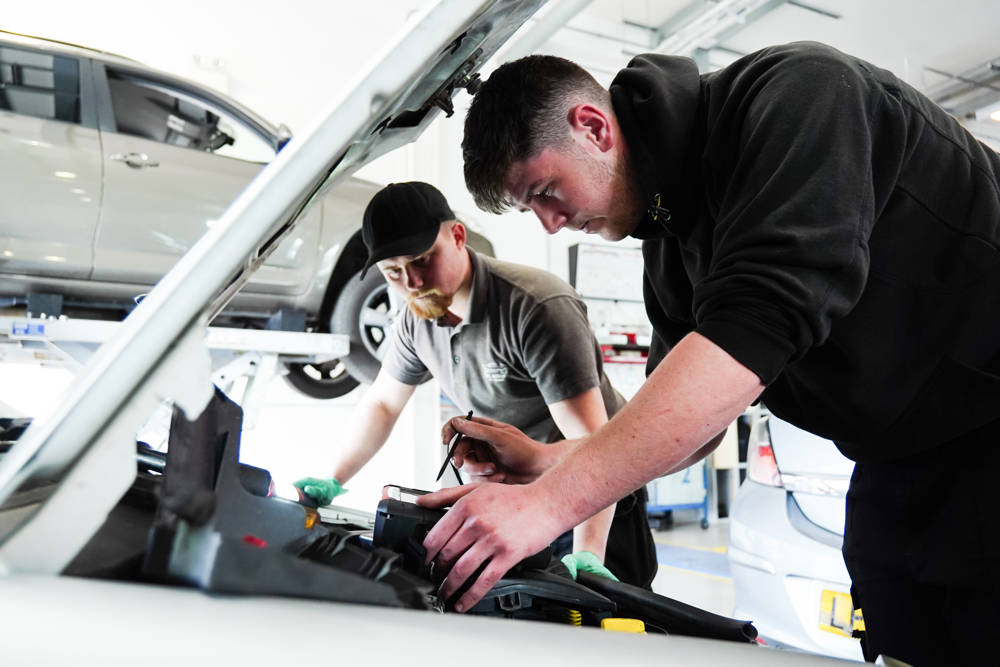
At City of Portsmouth College, our Highbury Campus is home to a well-equipped garage workshop and MOT test centre, exposing you to industry equipment throughout your learning journey.
Key facilities include:
- modern workshop with 12 ramps and more than 20 different cars
- new industry-standard tools and equipment, including laser alignment system
- up-to-date electronic equipment to diagnose vehicle faults
- table top machinery for hands-on learning.
Virtual tour
Take a closer look at our learning spaces and stand-out facilities with our interactive 360° virtual tour.
A great way to explore our facilities before booking a visit.
“Mechanics is a really good life skill. If you can fix a car you have a better understanding of how lots of things work.”Max Salgado-Nacke
Studied: Level 3 Automotive Apprentice
Currently: Trainee Engineer
& ISO Administrator at Van Walt
Careers within the automotive industry
Mechanic
Mechanics are involved from the concept and design of vehicles, through to the production and testing.
Main responsibilities:
- Oversee vehicle quality control
- Access the performance and safety of components
- Road test the viability of vehicle designs and blueprints
- Develop fuel technologies to minimise emissions
- Test products using computer simulations and models.

Salary range:
£20,000 - £45,000
Automotive Quality Controller
Mechanics are involved from the concept and design of vehicles, through to the production and testing.
Main responsibilities:
- Oversee vehicle quality control
- Access the performance and safety of components
- Road test the viability of vehicle designs and blueprints
- Develop fuel technologies to minimise emissions
- Test products using computer simulations and models.

Salary range:
£20,000 - £45,000
Automotive Electrician
Mechanics are involved from the concept and design of vehicles, through to the production and testing.
Main responsibilities:
- Oversee vehicle quality control
- Access the performance and safety of components
- Road test the viability of vehicle designs and blueprints
- Develop fuel technologies to minimise emissions
- Test products using computer simulations and models.

Salary range:
£20,000 - £45,000
Test Driver
Mechanics are involved from the concept and design of vehicles, through to the production and testing.
Main responsibilities:
- Oversee vehicle quality control
- Access the performance and safety of components
- Road test the viability of vehicle designs and blueprints
- Develop fuel technologies to minimise emissions
- Test products using computer simulations and models.

Salary range:
£20,000 - £45,000
Automotive Engineer
Automotive Engineers are involved from the concept and design of vehicles, through to the production and testing.
Main responsibilities:
- Oversee vehicle quality control
- Access the performance and safety of components
- Road test the viability of vehicle designs and blueprints
- Develop fuel technologies to minimise emissions
- Test products using computer simulations and models.

Salary range:
£20,000 - £45,000
Let’s help you shape your future.
Mechanics will soon need a broader than ever skill set
We were fascinated to see Hitachi Rail successfully integrate digital signalling technology into a steam locomotive originally designed in the 1940s. By enabling real-time communication between trains and infrastructure, the system is designed to improve safety, reliability and capacity on the network. The trial of this hybrid approach took place in Wales. It involved adding a turbogenerator, axle-driven alternator and battery bank to the train, along with Hitachi Rail’s software.
Frequently asked questions
Our Automotive courses range from introductory vehicle maintenance to advanced diagnostics and specialist technical qualifications.
You can begin with core mechanical skills before progressing to more complex systems and fault-finding techniques aligned with modern industry standards. With focus and determination, you can find your brilliance in a sector built on precision and expertise.
Yes. Practical workshop sessions form a central part of your training, giving you hands on experience with live vehicles.
Working on real engines and systems helps you develop confidence, precision and safe working practices.
You don't need previous mechanical experience to start on one of our introductory Automotive courses. These programmes are designed to build your confidence from the ground up, introducing you to core tools, workshop safety, vehicle systems and basic maintenance procedures in a structured and supportive environment.
If you're applying for a higher-level qualification, some prior study or practical workshop experience may be required. Entry requirements are clearly outlined on each course page so you can choose the level that best matches your current skills. Whatever your starting point, we focus on developing your practical ability, problem solving skills and professional standards step by step.
As you progress through your course, you'll develop an understanding of key vehicle systems such as engines, braking systems, steering, suspension and electrical components.
You'll also learn how to carry out fault finding and diagnostics using industry standard equipment. Developing these investigative skills is essential in modern workshops, where technicians must identify issues accurately and efficiently. This combination of mechanical knowledge and diagnostic ability prepares you for the expectations of today’s automotive workplace.
You may achieve recognised technical awards that support progression into employment, apprenticeships or further study.
These qualifications demonstrate your practical ability and technical understanding to employers.
Career opportunities include vehicle technician, MOT tester, diagnostic specialist, service advisor and progression into motorsport or specialist sectors.
The industry offers varied pathways for those who enjoy practical problem solving and precision work.
Automotive courses are highly practical, with a significant proportion of your time spent in the workshop developing hands on skills.
Alongside practical sessions, you will also study the technical theory that underpins vehicle systems, health and safety standards and industry regulations. This balanced approach ensures you not only know how to complete a task but also understand why it is carried out in a particular way. By combining theory with regular workshop experience, you build competence, confidence and professional awareness.
For workshop sessions, you'll usually need appropriate protective clothing such as safety boots and practical workwear to meet health and safety requirements.
All specialist tools and technical equipment are provided by the College in our training workshops. Before enrolment, you'll receive clear guidance on what to purchase and how to prepare, so you arrive ready to begin your training safely and confidently.
Once you have chosen the right course, simply visit the relevant course page and follow the clear application or enquiry instructions provided.
Each listing outlines entry requirements, next steps and key dates so you can move forward with confidence. After submitting your application, you will receive confirmation and further guidance about what to expect next.
Our process is designed to be straightforward and supportive, ensuring you feel informed at every stage as you take your first step towards finding your brilliance at City of Portsmouth College.
Yes. Attending an Open Event is one of the best ways to explore our facilities, meet tutors and speak directly with current students.
Open Events give you a genuine feel for College life, allowing you to see workshops, studios and classrooms in action. You can ask questions about course content, enrichment opportunities and progression routes, helping you make a confident and well-informed decision about your future.
Visiting in person often brings your ambitions into sharper focus and helps you picture yourself thriving in your chosen subject area.
After submitting your application or enquiry, you will receive confirmation along with details about the next stage of the process.
Depending on the course, this may include an interview, informal discussion, assessment activity or enrolment guidance. These stages allow us to understand your interests, goals and suitability for the programme, while also giving you the opportunity to ask further questions.
Our aim is to ensure you feel fully prepared, supported and confident as you move closer to starting your course.
If you are unsure which course is right for you, our admissions and curriculum teams are here to help.
They can talk through subject options, entry requirements, career ambitions and progression routes, offering personalised advice based on your interests and strengths. Whether you are deciding between pathways or exploring a completely new direction, you wi'll receive clear and practical guidance.
We are committed to helping you choose a course that challenges you, supports you and gives you the space to grow, so you can move forward with clarity, confidence and purpose.
People who viewed this subject also viewed


Have a question?
Get in touch and our advice and guidance team will be more
than happy to answer any questions you may have and guide
you in the right direction.