Uniformed Protective Services
Train like a professional. Realise your potential.
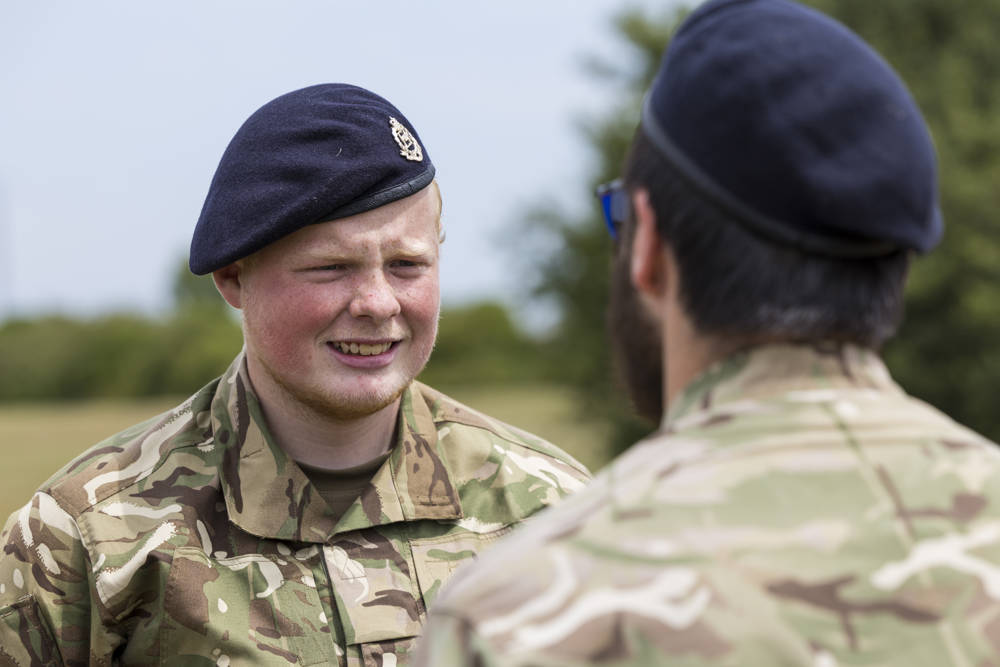
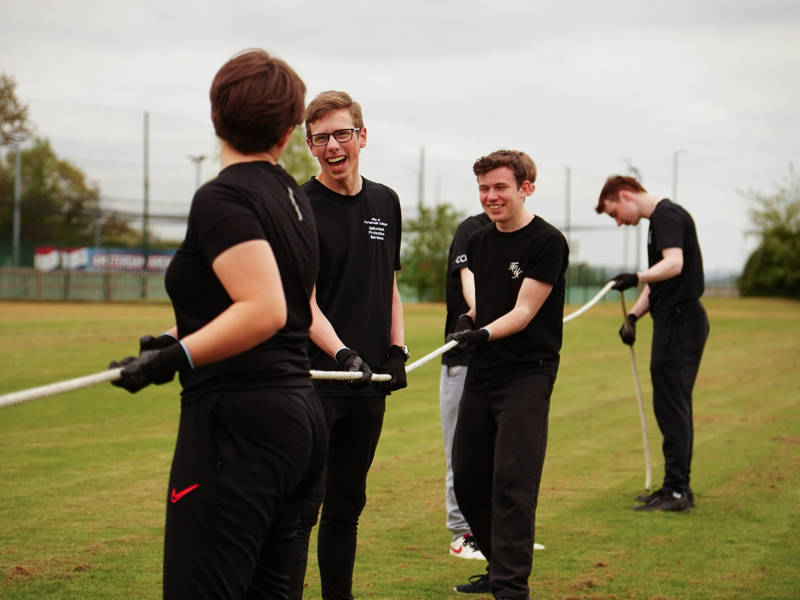
Uniformed Protective Services students train like professionals from day one, developing leadership, discipline, and resilience for careers in the armed forces, emergency services, and protective sectors. Through the Combined Cadet Force (CCF) and partnerships with the British Army, learners handle Scorpion rifles under supervision, compete in military skills competitions, and train in police riot control scenarios at Netley. Weekly PT sessions at HMS Temeraire and adventure activities at Queen Elizabeth Country Park build fitness, confidence, and teamwork. Graduates leave equipped to serve – with purpose, skill, and direction.
UNIFORMED PROTECTIVE SERVICES
Subject overview
What's on offer
In times of crisis or chaos, there are those who run from the danger, and then there are those who run towards it. If you fall into the latter category, then a career in the Uniformed Protective Services (UPS) could be the ideal choice for you.
Uniformed services cover a plethora of organisations, from the military and the police to the prison service and emergency services. As such, our courses at City of Portsmouth College are highly active and as hands-on as you’d expect, as we train you to prepare for your future roles.
Depending on the pathway you choose – Armed Forces or Blue Light – you’ll be given the physical, practical and theoretical training to get you ready. The Armed Forces pathway includes the potential to join the Combined Cadet Force (CCF) and take the Royal Navy entry test, while the latter includes a Criminology or Medical Science A Level.
Subject highlights
- test your physical and mental endurance in our military skills competitions
- develop climbing, kayaking, paddle boarding and orienteering skills at Queen Elizabeth Country Park
- learn safe weapons handling and complete riot training at the Police Training Skills facility
- build physical fitness and discipline with weekly training at HMS Temeraire and use the swimming pool, gym and fitness facilities.
Course: Level 2 BTEC Certificate in Preparation for Public Services
- Course Type: Vocational
- Campus: Sixth Form Campus
- Attendance: Full-time
- Course Code: Q100180
100% Pass Rate
Proven with perfection in 24/25

Course: Level 3 BTEC Diploma in Uniformed Protective Services
- Course Type: Vocational
- Campus: Sixth Form Campus
- Attendance: Full-time
- Course Code: Q100182


Our facilities
Staying active is important for careers in the uniformed protective services. At City of Portsmouth College, you’ll have access to great facilities, so you can stay fit your way.
Key facilities include:
- sports hall for basketball, badminton, volleyball, netball, hockey and football
- 4G Goals football facility
- fully equipped fitness suite
- dance studio with sprung floor.
Virtual tour
Take a closer look at our learning spaces and stand-out facilities with our interactive 360° virtual tour.
A great way to explore our facilities before booking a visit.
“My favourite part is the physical side of the course. You get to go out to HMS Temeraire to swim and use their facilities. This course prepares you for the career you want.”Katie Hutton
Studying: Level 3 Diploma in Uniformed Protective Services - Blue Light Pathway & Level 3 Diploma in Criminology
School: St Edmund’s Catholic School
Future plans: To join the British Army – Royal Military Police
Careers within Uniformed Protective Services
Aid Worker
Aid Workers help people affected by man-made and natural disasters, like wars and earthquakes.
Main responsibilities:
- Help communities during crises by providing aid like food, shelter and medicine
- Organise transport, supplies and teams to reach people in need
- Train and support local staff and volunteers to respond in emergencies
- Work with other organisations to plan long-term recovery projects
- Carry out admin tasks like writing reports and managing budgets

Salary range:
£15,000 - £30,000
Coastguard
Coastguards save lives at sea by working in operations centres or frontline rescue services.
Main responsibilities:
- Monitor UK waters and respond to distress calls
- Coordinate or take part in search and rescue missions
- Advise people on sea and coastal safety, tides and weather conditions
- Support vessels with safe navigation, and monitor communications by satellite and radio
- Deal with incidents like pollution, debris or wreckage

Salary range:
£25,000 - £37,000
Dog Handler
Dog Handlers work with trained dogs to protect people and properties from crime.
Main responsibilities:
- Work with your dog to search for people, drugs, firearms or explosives
- Patrol premises, protect property and help control crowds
- Train regularly and attend courses to develop your dog’s skills
- Care for your dog at home, ensuring it stays healthy and alert
- Support police, security or rescue teams in a range of environments

Salary range:
£21,000 - £30,000
Forensic Collision Investigator
Forensic Collision Investigators investigate the causes of road traffic accidents.
Main responsibilities:
- Investigate serious road traffic collisions by examining vehicles and crash scenes
- Reconstruct incidents using measurements, damage analysis and time-distance studies
- Analyse data from tachographs and consult vehicle manufacturers for technical insight
- Produce detailed written reports to support investigations
- Present evidence to police teams, legal professionals and in court

Salary range:
£20,000 - £40,000
Border Force Officer
Border Force Officers enforce immigration and customs regulations at airports and ports.
Main responsibilities:
- Check passports and travel documents at border entry points
- Question travellers and assess their reasons for entering the UK
- Search people, luggage and vehicles for illegal items
- Work with police and immigration teams on joint operations
- Write reports and give evidence in court when needed

Salary range:
£28,000 - £34,000
Let’s help you shape your future.
UK defence spending increase will boost opportunities
The UK Government’s commitment to raise defence spending to 5% of GDP is big news for the uniformed protective services. This historic commitment includes defence spending, wider homeland security and national resilience. It’s a huge investment that’s set to deliver thousands of new jobs, to help make the country safer, more stable and more competitive on the world stage. As spending rises across the decade ahead, we expect to see opportunities grow and grow.
Frequently asked questions
This subject prepares learners for careers in public service roles such as the police, fire and rescue service, armed forces or emergency services.
It focuses on teamwork, leadership and understanding how uniformed organisations operate. If you are driven by purpose and service, this is where you can find your brilliance while preparing to protect and support your community.
Courses may include physical training, teamwork challenges, leadership tasks and scenario-based exercises designed to reflect real public service situations.
You might take part in command tasks, problem solving activities and structured drills that develop communication, cooperation and decision making under pressure. These practical elements are balanced with classroom study, where you will explore topics such as the structure of uniformed services, law, ethics and community responsibility.
Together, these experiences help you build resilience, discipline and the confidence to take initiative.
A reasonable level of fitness is beneficial, as physical activity forms part of the programme.
However, you are not expected to arrive at peak condition. The course supports you in developing your stamina, strength and overall wellbeing over time. Tutors provide guidance on safe training, goal setting and maintaining a positive mindset, helping you progress steadily and sustainably.
Commitment, determination and a willingness to improve are just as important as your starting fitness level.
Some programmes include enrichment activities, visits or residential experiences designed to strengthen teamwork, independence and resilience.
These activities may involve outdoor challenges, team building exercises or exposure to real public service environments. Taking part helps you step outside your comfort zone, develop trust within your group and gain a deeper understanding of the expectations placed on uniformed service professionals.
Progression routes include employment within the police, fire and rescue service, armed forces, prison service or other public service organisations, as well as apprenticeships and higher education.
Beyond specific job roles, you will develop transferable skills such as leadership, communication, organisation and problem solving. These attributes are highly valued across many sectors and prepare you for a future built on responsibility and service.
Once you have chosen the right course, simply visit the relevant course page and follow the clear application or enquiry instructions provided.
Each listing outlines entry requirements, next steps and key dates so you can move forward with confidence. After submitting your application, you will receive confirmation and further guidance about what to expect next.
Our process is designed to be straightforward and supportive, ensuring you feel informed at every stage as you take your first step towards finding your brilliance at City of Portsmouth College.
Yes. Attending an Open Event is one of the best ways to explore our facilities, meet tutors and speak directly with current students.
Open Events give you a genuine feel for College life, allowing you to see workshops, studios and classrooms in action. You can ask questions about course content, enrichment opportunities and progression routes, helping you make a confident and well-informed decision about your future.
Visiting in person often brings your ambitions into sharper focus and helps you picture yourself thriving in your chosen subject area.
After submitting your application or enquiry, you will receive confirmation along with details about the next stage of the process.
Depending on the course, this may include an interview, informal discussion, assessment activity or enrolment guidance. These stages allow us to understand your interests, goals and suitability for the programme, while also giving you the opportunity to ask further questions.
Our aim is to ensure you feel fully prepared, supported and confident as you move closer to starting your course.
People who viewed this subject also viewed






Have a question?
Get in touch and our advice and guidance team will be more
than happy to answer any questions you may have and guide
you in the right direction.