Science
Find the right formula for your science career
At City of Portsmouth College, science students go far beyond the classroom. From advanced lab work to competing in prestigious national challenges like the British Science Olympiads and the Cambridge Chemistry Challenge, you’ll develop the skills, confidence and experience to thrive in university, research or medicine.
With university-level practicals, strong links to the University of Portsmouth, and preparation for Oxbridge entry exams, this is where the next generation of doctors, researchers and engineers begin their journey.
SCIENCE
Subject overview
What's on offer
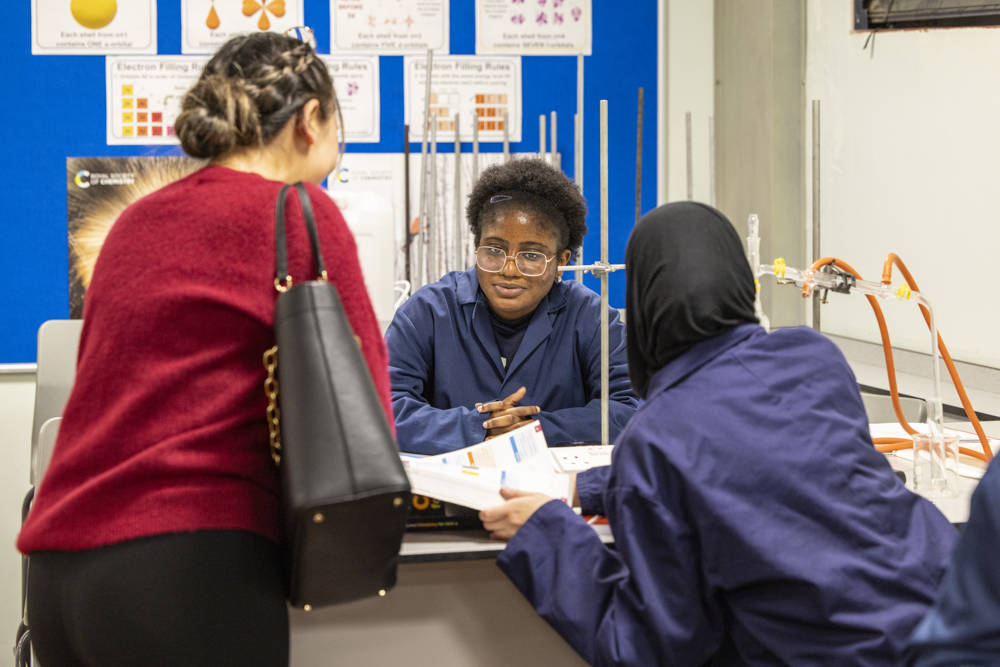
Curious about the natural world, space, medicine, the human body or engineering? Science provides many answers, and often more questions. At City of Portsmouth College, we’ll help you look through the microscope and navigate this fascinating subject.
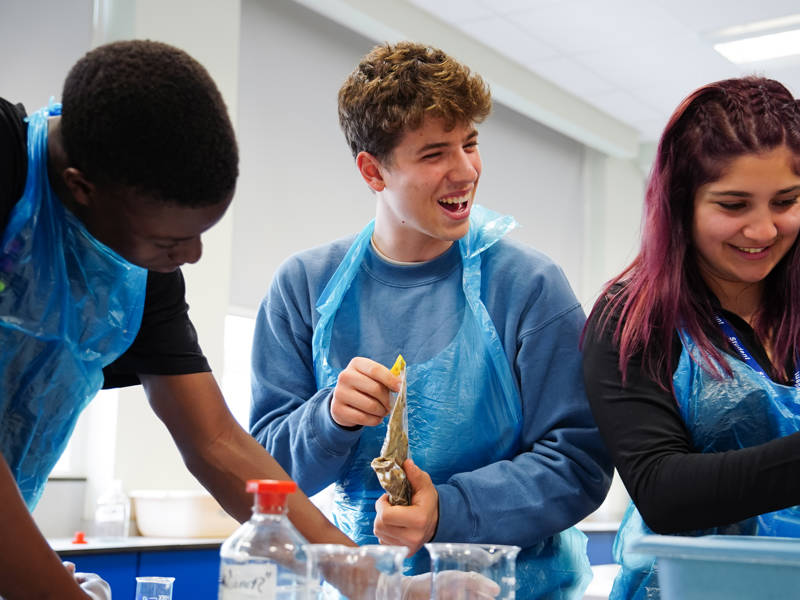
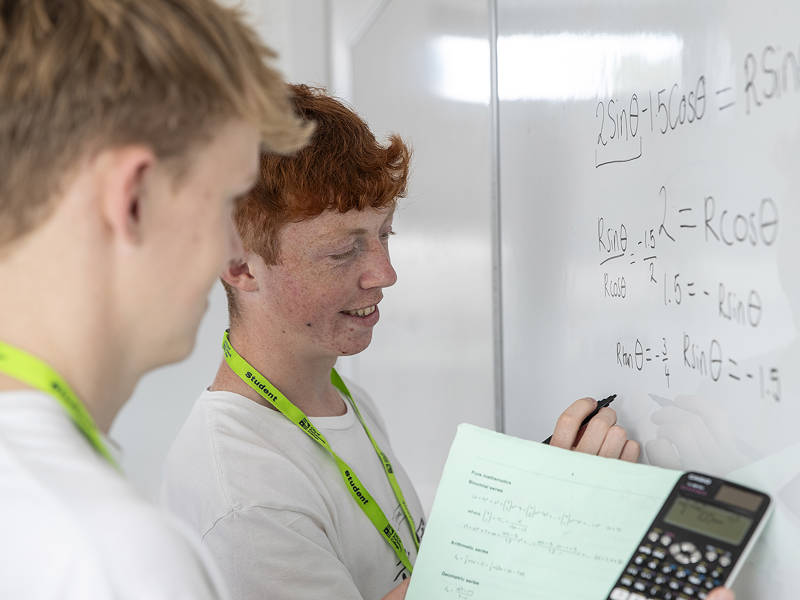
Our courses are hands-on, ambitious and designed for the future, and much more than what happens in the classroom. You’ll gain practical experience and vital skills that set you up for success, whether your next step is to university or into the workplace.
Alongside field trips to show you how what you learn can be applied in future careers, you can boost your CV through participation in science competitions.
We’ve got a great formula for brilliance – join us.
Subject highlights
- choose to enter a range of national competitions, challenges and Science Olympiads
- great links with universities can help you transition to a degree
- explore careers and start networking with potential employers through our industry connections
- physics students have the chance to visit the world-famous Large Hadron Collider in Switzerland.
Course: A Level Biology
- Course Type: A Levels
- Campus: Sixth Form Campus
- Attendance: Full-time
- Course Code: Q100152
Popular Course!
15 people have been looking at this course recently

Course: A Level Chemistry
- Course Type: A Levels
- Campus: Sixth Form Campus
- Attendance: Full-time
- Course Code: Q100154

Course: A Level Physics
- Course Type: A Levels
- Campus: Sixth Form Campus
- Attendance: Full-time
- Course Code: Q100156
Course: Level 3 AAQ in Medical Science
- Course Type: Vocational
- Campus: Sixth Form Campus
- Attendance: Full-time
- Course Code: Q274196


Our facilities
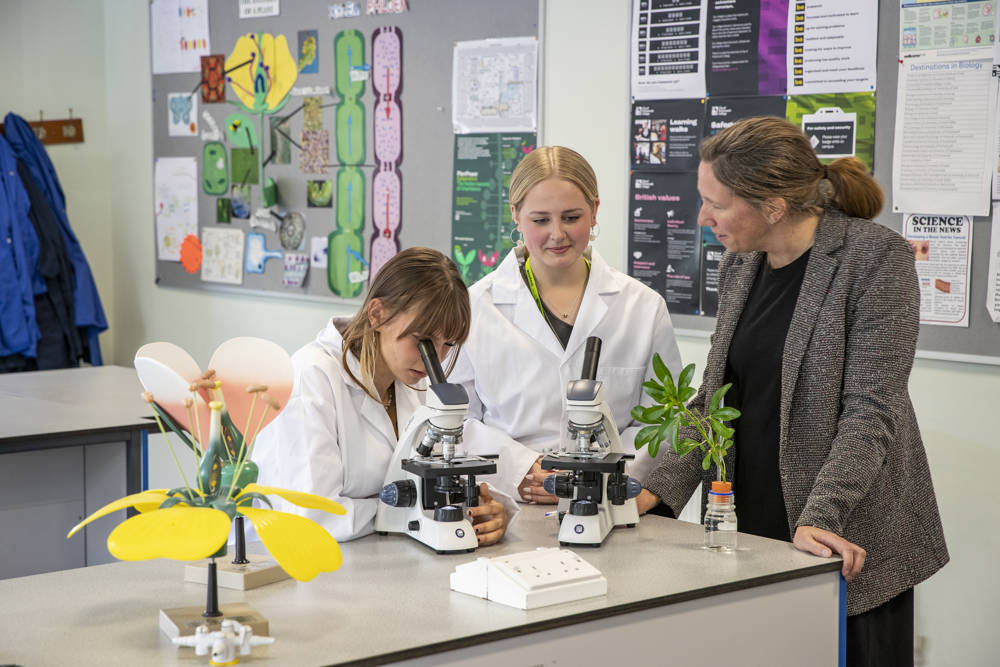
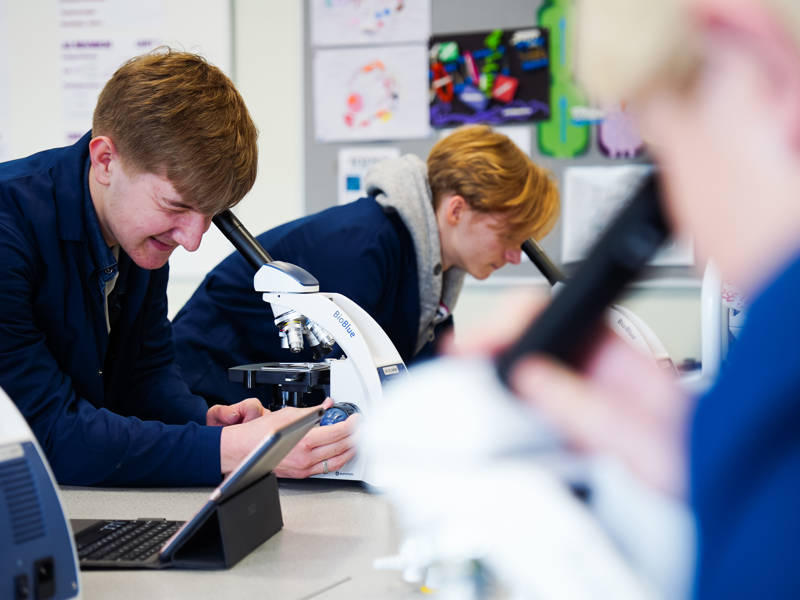
At City of Portsmouth College, we want you to develop practical skills that employers are looking for. So, we offer lots of opportunities for you to get hands-on.
Key facilities include:
- fully resourced laboratories
- the latest computing technology
- space for experiments and investigations
- regular visits to external labs.
Virtual tour
Take a closer look at our learning spaces and stand-out facilities with our interactive 360° virtual tour.
A great way to explore our facilities before booking a visit.
“My chemistry lecturer always wants you to succeed and learn as much as you can, he always gives you extra knowledge to give us the whole story behind why things work the way they do. Chemistry is so fun, it's very hands on and you do a lot of experiments.”Ivo Opiela
Studying: A Level Chemistry
Careers in science
Climate Scientist
Climate Scientists investigate human impact on the climate, and help to shape policies.
Main responsibilities:
- Collect and analyse climate data to understand changes in the air, sea and land
- Use computer models to predict what will happen to the climate in the future
- Research climate change from the past, to inform solutions for the present
- Advise governments and organisations on climate risks and strategies for sustainability
- Share your discoveries by writing reports, teaching or giving presentations

Salary range:
£15,000 - £55,000
Ecologist
Ecologists explore the relationship between plants, animals and the environment.
Main responsibilities:
- Gather and analyse data on wildlife, habitats and environmental health
- Assess how human activities, like construction or farming, are affecting nature
- Develop and manage conservation projects to protect and restore ecosystems
- Advise local government, property developers and landowners on relevant laws
- Champion environmental awareness and community involvement in habitat protection

Salary range:
£22,000 - £42,000
Astrophysicist
Astrophysicists study space to deepen our understanding of how the Universe evolved.
Main responsibilities:
- Expand our knowledge of the Universe’s origins and structure through data analysis and theory
- Analyse data on stars, planets and galaxies from telescopes, satellites and space missions
- Develop software or instruments to capture and interpret cosmic data
- Model the behaviour of celestial bodies using computer simulations Predict future cosmic events by identifying patterns from past observations

Salary range:
£15,600 - £60,000
Wildlife Biologist
Wildlife Biologists make a difference to conservation activities and help protect ecosystems.
Main responsibilities:
- Work in agriculture, conservation, pharmaceutical or government agencies
- Specialise in an areas such as animal environments or a particular type of creature Identify, record and monitor animal species
- Carry out research and animal studies, and gather and interpret data Write reports, give presentations and publish your research

Salary range:
£23,000 - £48,000
Data Scientist
Data Scientists analyse raw data and present it as meaningful information that clients can use.
Main responsibilities:
- Collect data from different sources, then collate it to explore patterns and theories
- Use statistical analysis and AI to generate insights and guide decisions
- Build automated systems that improve business processes and strategies
- Ensure data you work with is accurate and always kept secure
- Communicate your findings clearly, to help organisations understand the value of data

Salary range:
£32,000 - £80,000
Let’s help you shape your future.
Science could become Britain’s superpower
Science is at the heart of UK plans to make the nation healthier, wealthier and stronger. From solving the problems of clean energy, to shaping new ways to fight climate change, there’s never been a better time to build a career in science. In 2025, the Science and Technology Network was launched to champion UK science and tech worldwide. The Network aims to build partnerships internationally – which means people with science qualifications could enjoy a global career.
Frequently asked questions
You will typically need at least five GCSEs at grade 4 or above, including a minimum grade 6 in Science and grade 5 in maths.
Specific requirements may vary depending on the pathway, such as Biology, Chemistry or Physics. Strong foundations in scientific knowledge and numeracy ensure you are prepared for the pace, depth and analytical challenge of advanced study.
If you are unsure whether you meet the criteria, our team can advise you on the most appropriate route to help you progress with confidence.
You will take part in a wide range of hands-on experiments in fully equipped laboratories.
Practical work is carefully designed to develop accuracy, analytical thinking and safe laboratory technique. You will plan investigations, handle specialist equipment, record results systematically and evaluate findings using scientific reasoning.
These experiences mirror university level expectations and help you build the precision, curiosity and resilience required in scientific careers.
Science combines in depth theoretical study with regular laboratory sessions and enrichment activities.
You will explore core scientific principles in lessons before applying them in practical contexts, strengthening your understanding through experimentation. The course also develops mathematical application, data analysis and extended writing skills, all of which are essential for success in higher education.
This integrated structure ensures you grow in both knowledge and confidence as an independent scientific thinker.
We offer mentoring, revision workshops and one to one support with subject specialists.
Science is intellectually demanding, but you will be supported to break down complex concepts into manageable steps. Regular feedback, targeted intervention and structured revision sessions help you stay on track and continue progressing steadily.
With commitment and the right guidance, you can find your brilliance through curiosity, experimentation and disciplined study.
Many students progress to university degrees in subjects such as Medicine, Biology, Chemistry, Physics, Engineering and Environmental Science.
The qualification also supports entry into STEM apprenticeships and science-based careers in research, healthcare, technology and industry. Studying Science demonstrates analytical strength, problem solving ability and intellectual rigour, positioning you strongly for competitive university applications and ambitious professional pathways.
Once you have chosen the right course, simply visit the relevant course page and follow the clear application or enquiry instructions provided.
Each listing outlines entry requirements, next steps and key dates so you can move forward with confidence. After submitting your application, you will receive confirmation and further guidance about what to expect next.
Our process is designed to be straightforward and supportive, ensuring you feel informed at every stage as you take your first step towards finding your brilliance at City of Portsmouth College.
Yes. Attending an Open Event is one of the best ways to explore our facilities, meet tutors and speak directly with current students.
Open Events give you a genuine feel for College life, allowing you to see workshops, studios and classrooms in action. You can ask questions about course content, enrichment opportunities and progression routes, helping you make a confident and well-informed decision about your future.
Visiting in person often brings your ambitions into sharper focus and helps you picture yourself thriving in your chosen subject area.
After submitting your application or enquiry, you will receive confirmation along with details about the next stage of the process.
Depending on the course, this may include an interview, informal discussion, assessment activity or enrolment guidance. These stages allow us to understand your interests, goals and suitability for the programme, while also giving you the opportunity to ask further questions.
Our aim is to ensure you feel fully prepared, supported and confident as you move closer to starting your course.
People who viewed this subject also viewed





Have a question?
Get in touch and our advice and guidance team will be more
than happy to answer any questions you may have and guide
you in the right direction.